Have you ever had an area of your body that simply feels stuck—tight shoulders that never completely relax, an old injury that still aches, or muscles that feel heavy and stiff no matter how much you stretch?
In Traditional Chinese Medicine, these sensations may be understood as disturbances in the normal movement of Qi and Blood. One of the traditional therapies used to address this pattern is cupping.
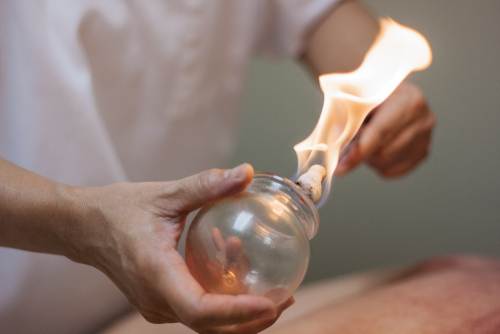
Cupping creates suction that gently lifts the skin and superficial tissues. From a TCM perspective, this helps move Qi and Blood through areas where circulation has become stagnant, particularly when there is pain, tightness, stiffness, or heaviness.
But stagnation is not always the same. Blood stasis is traditionally associated with more fixed or persistent pain and may follow an old injury or trauma. Cold can constrict and slow movement, while Dampness is associated with sensations of heaviness, stiffness, and discomfort that may become more noticeable in humid weather.
This is why cupping is about more than relaxing a sore muscle. Traditionally, it has also been used in different TCM patterns involving the back, neck and shoulders, respiratory system, physical fatigue, and recovery after exertion.
The familiar red or purple circles are created by the suction and changes in the superficial tissues. Their appearance varies between people and body areas. Darker marks do not mean that more “toxins” have been removed, and stronger suction does not necessarily mean better treatment.
Cupping may be used alone or combined with acupuncture, gua sha, moxibustion, or acupressure, depending on the person’s condition and TCM pattern.
The traditional idea is simple but important: when Qi and Blood move freely, the body functions more comfortably; when movement becomes restricted, restoring that movement becomes part of the treatment.